Lidl consults on plans for Northstowe’s first full-size supermarket on Station Road
Lidl consults on plans for Northstowe’s first supermarket
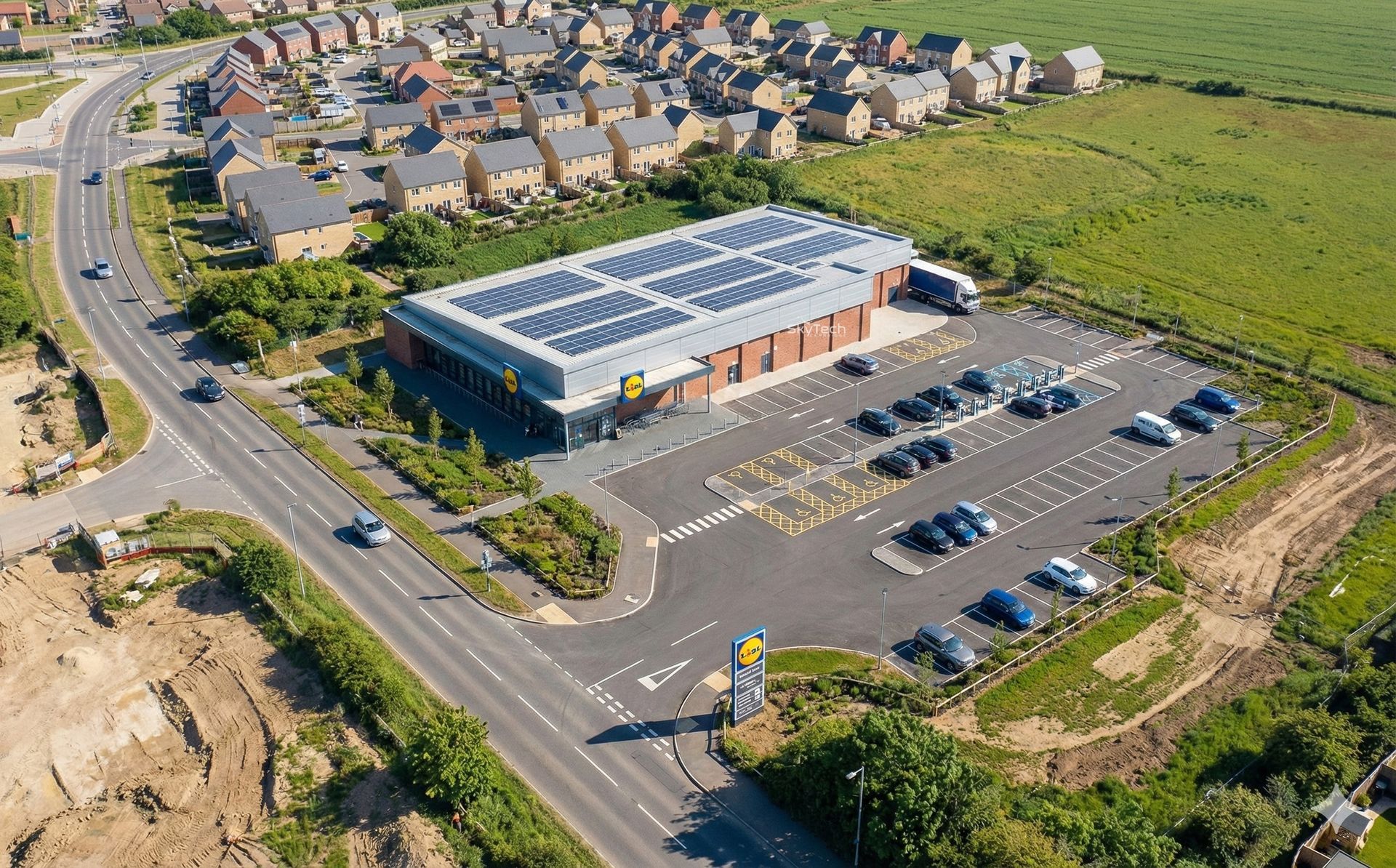
Artist’s impression showing how the proposed Lidl supermarket on Station Road (B1050) in Northstowe may look. Located on the former Pentair Hypro EU site. © Skytech Cambridge Ltd
Northstowe, Cambridgeshire (29 December 2025) — Lidl GB has launched a public consultation on proposals for a new foodstore at Northstowe, on land of the former Pentair Hypro EU industrial site on Station Road.
If delivered, the scheme would bring a larger-format grocery option to the new town, expanding local choice for a fast-growing community planned for up to 10,000 homes and around 25,000–26,000 residents as build-out continues.
Lidl’s consultation states the store would sit on Station Road (the B1050), a key route through the northern side of Northstowe and a main connection towards Longstanton and villages beyond. The proposed site is also separate from the emerging town centre plans, which are intended to serve the full settlement as it matures.
Because of its roadside position, the proposed supermarket would not only serve Northstowe residents but could also attract shoppers from nearby villages within the wider catchment previously used to plan Northstowe’s local-centre retail offer (typically framed as a short “primary” drive-time area plus a wider “secondary” zone).
A boost for day-to-day living — especially for households without a car
Northstowe sits about 10km north-west of Cambridge and is being built alongside the guided busway, which is a key public transport link for many residents. But retail strategy work for the area has historically highlighted how “main food” trips were dominated by larger out-of-town supermarkets — particularly the Tesco Extra at Bar Hill.
That pattern was not just anecdotal. Earlier evidence used in Northstowe planning material recorded Tesco Extra, Bar Hill taking the largest share of “most recent main food shop” responses in the relevant survey zone (55%), with a similarly high share for “other main food shop” trips (41%). Separate environmental statement material for Northstowe Phase 1 also describes the Bar Hill Tesco Extra as a major out-of-catchment draw, and records its net sales floorspace at 9,392 sq m — vastly larger than typical village convenience stores.
A Northstowe store on Station Road could therefore reduce the need for longer, car-dependent journeys for a full weekly shop, by providing a closer “main shop” option alongside the smaller day-to-day convenience offer in surrounding villages. Lidl says the site is intended to be “easily accessible”, with pedestrian and cycle routes passing the store and routes designed to lead directly to the entrance.
Size, facilities, and parking
According to the consultation material, the proposals include:
- A new Lidl foodstore with a net sales area of 1,529 sq m
- “Modern in-store facilities” including the in-store bakery and customer toilets
- 115 car parking spaces, including:
- 6 disabled bays
- 6 parent-and-child bays
- 2 electric vehicle charging spaces, with capacity to add more in future
- Landscaping intended to screen the site, with retention of existing boundary trees where possible
- Solar panels expected to provide around 25% of the store’s energy requirements
The 1,529 sq m net sales figure also aligns with Lidl’s published “standard” new-store specification in its UK site requirements (which lists 1,529 sq m sales area, plus ancillary space, for a typical format).
Jobs and local economic impact
Lidl’s consultation boards say the store would deliver
up to 40 new local jobs. The same material sets out headline pay and employment terms, including:
- Minimum hourly pay from £13.00, rising to £13.95 with length of service
- A commitment not to use zero-hours contracts
- Recruitment typically focused on a store’s primary catchment, with the consultation stating that around 80% of roles are often filled locally
Sustainability and sourcing
Beyond the solar panels referenced in the proposals summary, Lidl’s consultation also lists several in-store measures intended to reduce energy and environmental impact, including building management systems, motion sensors, overnight lighting controls, and low-carbon refrigeration. It also claims that rapid EV charging can provide up to 80% charge in approximately 50 minutes (depending on battery type).
On food and sourcing, the consultation promotes a “best of British” message, stating that Lidl aims to source and support domestic farmers, and claims two-thirds of its products come from British suppliers, with 100% of fresh meat, eggs, milk, butter and cream described as British-sourced. It also says Lidl sells over 200 Fairtrade-certified products through the year.
Lidl also references wider charitable work, including support intended to help deliver over 5 million meals every year via surplus food redistribution, and a fundraising target that would take its NSPCC total to £10m.
Regenerating a brownfield site
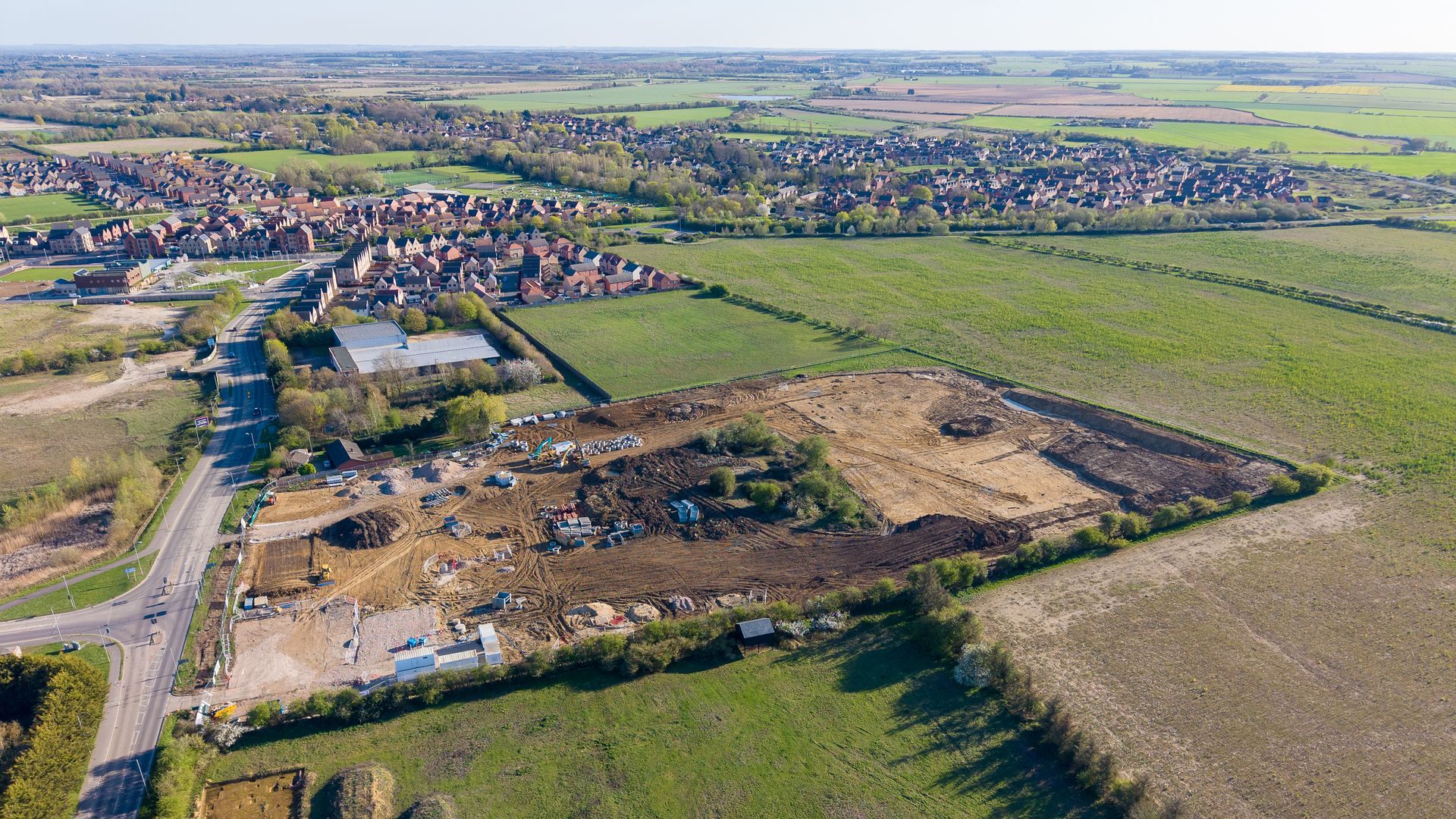
Lidl describes the project as the redevelopment of a currently vacant brownfield site, regenerating the former industrial land on Station Road. The consultation site plan shows the store building set behind a customer car park, with vehicle access from Station Road and pedestrian connections indicated along the frontage.
Lidl says it is preparing a planning application for submission to the Council. If approved, the company will then “set out a further construction timetable”.
No build programme or opening date has been published at this stage. However, recent UK commentary around Lidl schemes often references build programmes in the region of 26–30 weeks once work starts on site (varying by complexity and enabling works).
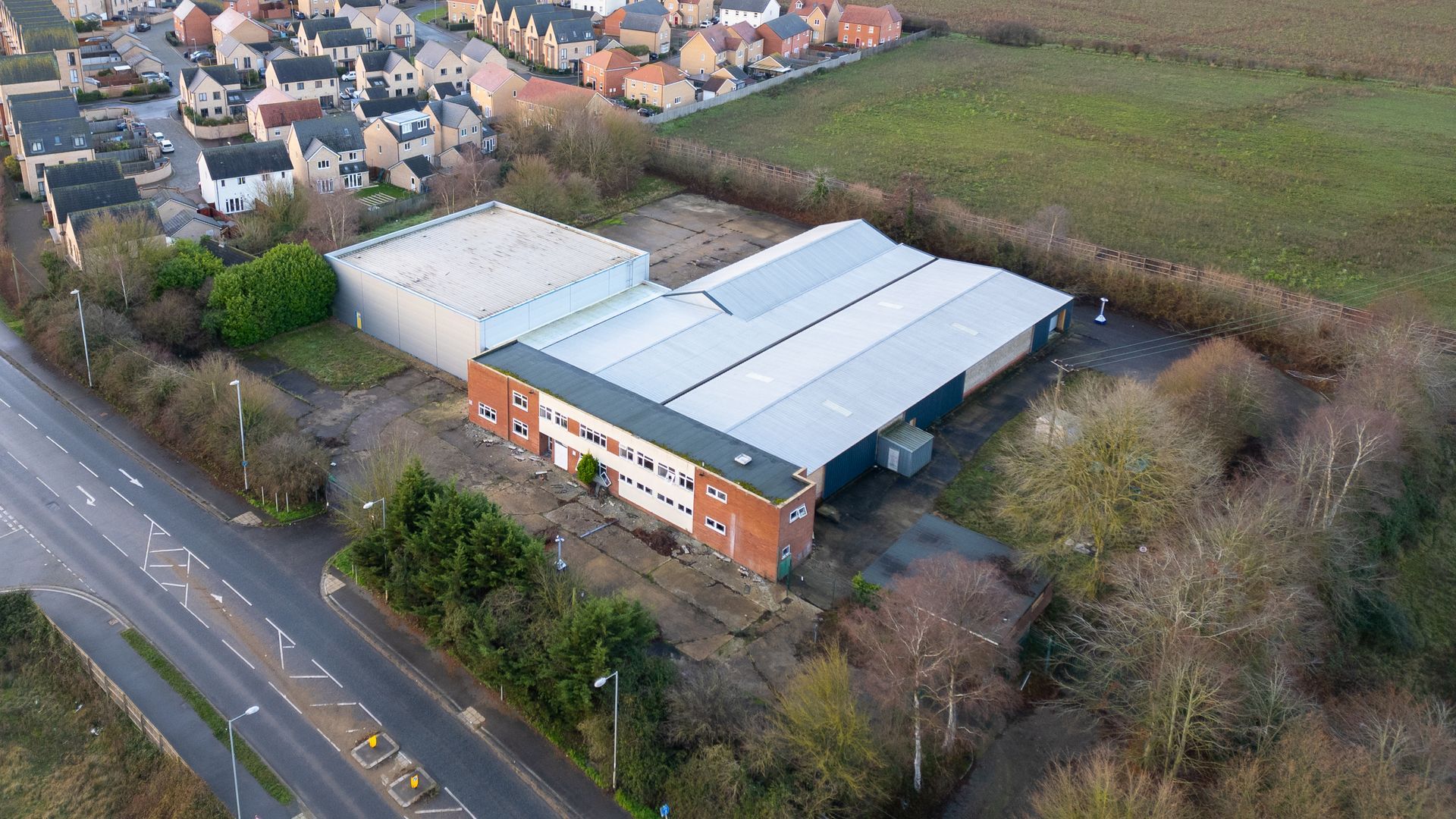
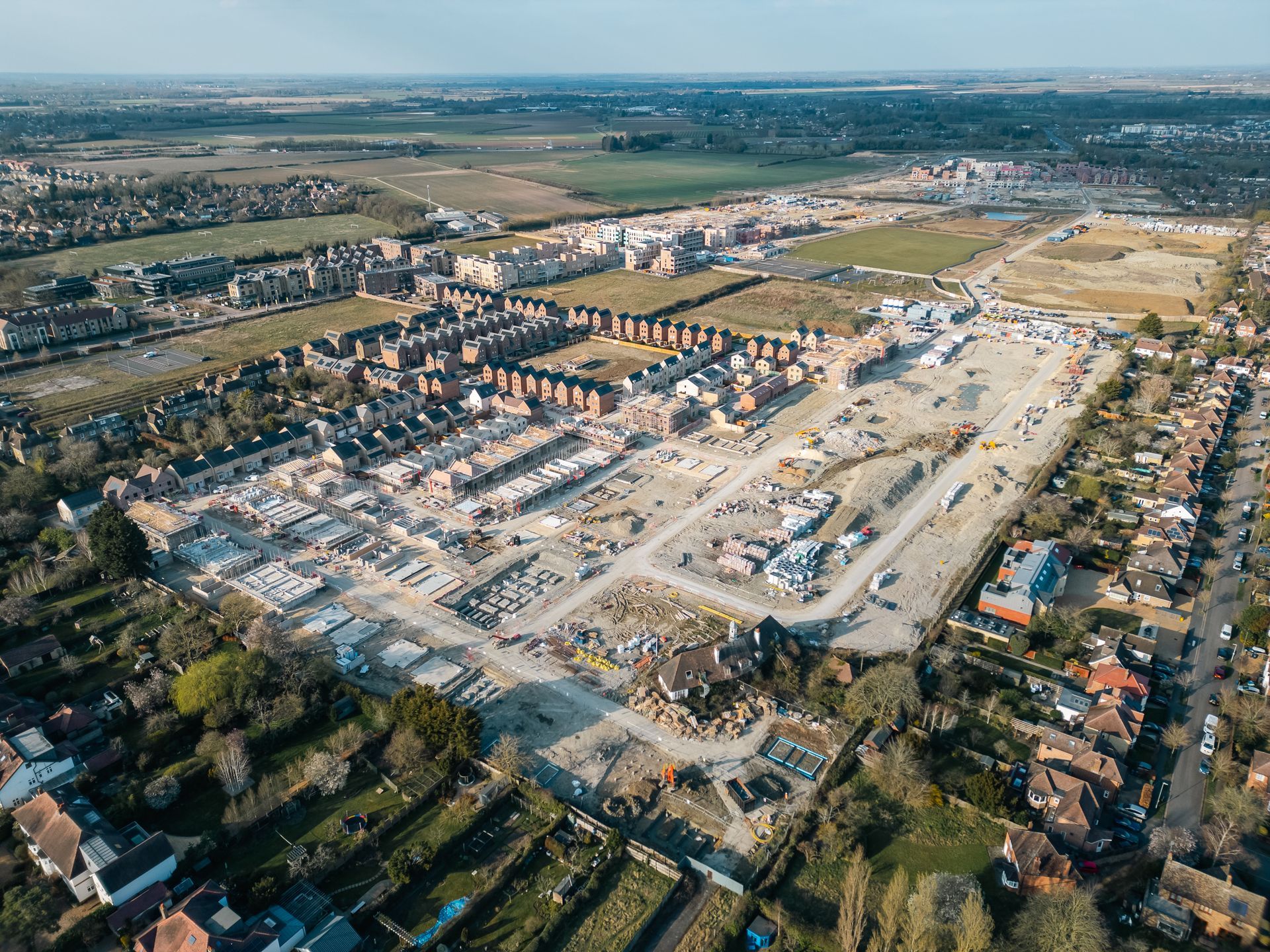
Drone photo of the former Pentair warehouse brownfield site on Station Road in Northstowe, Cambridgeshire, showing current site conditions. © Skytech Cambridge Ltd